On September 18, a monarch near Grand View, Idaho was fitted with a solar-powered tag about the size of a grain of rice. Thirty-eight days and more than 600 miles later, on October 26, it reached Ellwood and came down at Sandpiper Golf Course. The tag is WR087-LULU, and the City of Goleta's Monarch Press calls the butterfly Lulu. Anyone with a phone could watch her trip on the free Project Monarch app.
Lulu now has company. On November 12, the local group Ellwood Friends worked with biologists from Althouse and Meade to catch ten butterflies at Ellwood and fit each one with a Bluetooth tag, according to the Santa Barbara News-Press. If you walk to the grove over Thanksgiving weekend, some of the butterflies around you have names, and you can check on them from your kitchen afterward.
Why ten tagged butterflies matter at a grove this size
For years the grove was judged by how many monarchs were in it. Noozhawk reported season peaks at the Ellwood Main Grove of 15,055 in 2021-22, 12,387 in 2022-23 and 26,383 in 2023-24. Noozhawk calls the Main Grove the largest wintering site in Southern California. In December 2024, the same outlet reported that consultants had counted four.
The 2025-26 winter was smaller still. The Santa Barbara Independent reported that Ellwood's highest count that season was 20, in October 2025, and that the January 2026 count across every Ellwood site came to two. At the season's last count in early March 2026, Noozhawk reported that biologists found one.
At those numbers, a head count tells biologists only so much, and the tags pick up where it stops. Last winter's trackers showed that the Goleta butterflies had probably left on their spring migration by the March count, Noozhawk reported. A count only says how many butterflies hung on a branch that day. A tag shows where one went next. This season's tags send data through the Project Monarch app and the Motus network. The research teams are also searching Ellwood Mesa for overwintering pockets nobody has found yet.
Charis van der Heide is the senior biologist who counts the Ellwood sites for the City. In January she told the Independent that the next season "could go either way." Her reason for hope comes from this grove. In 2020, 10 monarchs were counted at Ellwood. The next year, California's population bounced back to almost a quarter million, and Ellwood's 2021-22 peak passed 15,000. A low winter has been followed by a big one here before.
The names on this season's roster
Ellwood Friends has given its tagged monarchs names that sound like a neighborhood bridge club: Toad, Ellie Wood, Penny, Maxine, Fifi LeMoque and Frau. The News-Press reported that a few of the ten still had no names. Anyone can name one for a $1,000 donation, and the money goes toward tracking equipment and field research. The current list and instructions for following the butterflies are at Ellwood Friends. An annual supporting membership is $40.
The group also has a new director, Anne Burdette. She was born and raised in Santa Barbara and was formerly president of the Santa Barbara Urban Creeks Collective. She also sits on the City of Santa Barbara's Creeks Advisory Committee. In the role, she works with the group's steering committee on stewardship partnerships with the City of Goleta and local nonprofits.
This week is also a statewide counting week. The Xerces Society's Western Monarch Count holds its mid-season survey from November 14 to December 6, 2026, which takes in Thanksgiving. The City's own counts at Ellwood are done by biological consultants. When they are published, they go up on the Goleta Butterfly Grove page.
Walking out to the grove this week
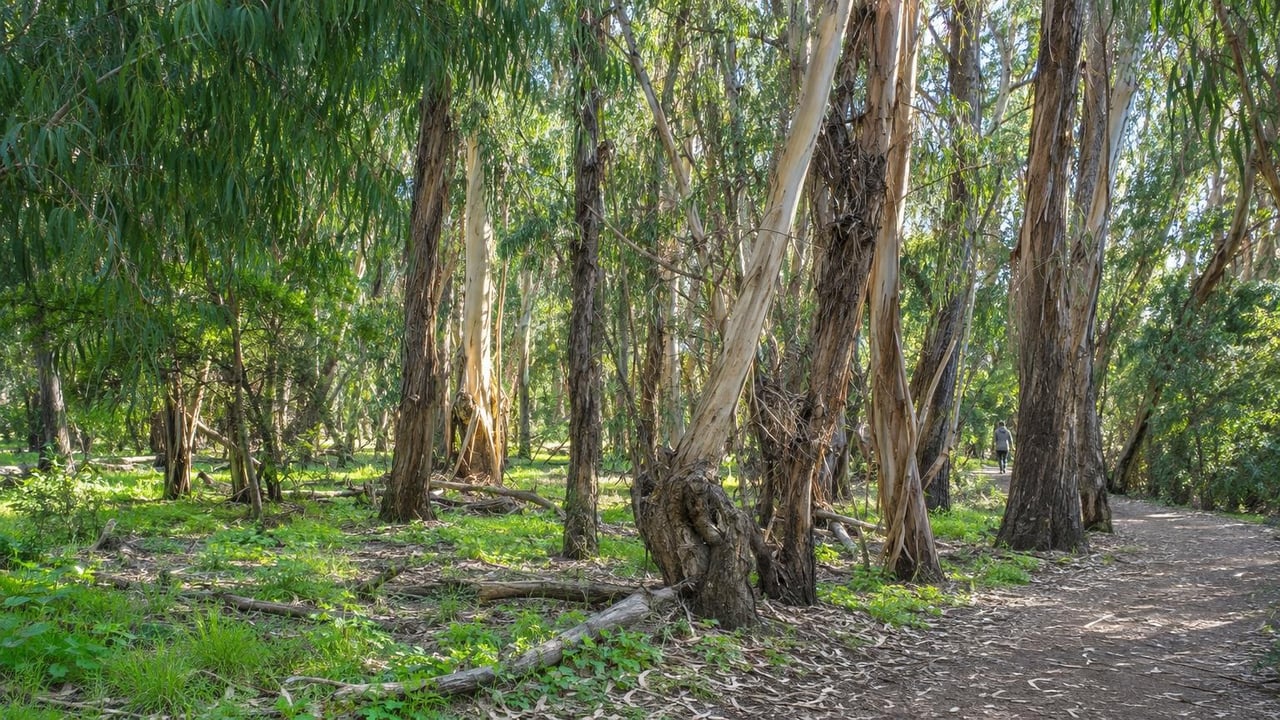
The City's directions start at the free Ellwood Mesa Open Space and Sperling Preserve parking area, 7729 Hollister Avenue, across from Ellwood Elementary School. The grove is a little over half a mile from the lot, and butterfly trail markers mark the way. MTD Line 25 stops at Viajero on Hollister Avenue, close to the lot, so a car is optional. Entry is free, the grove is open until sunset, and there is a portable restroom at the lot.
The time of day decides what you see. The City's guidance says monarchs stay in their clusters in the morning and on cool days, and fly and puddle around the grove in the afternoon and on warm days. The population usually peaks near the end of December. A few habits make the walk easier:
- Go in the morning if you hope to see a cluster, and bring binoculars. The City recommends binoculars and sturdy shoes.
- Skip the visit when it is raining or the ground is still muddy from a storm. The City warns of fallen trees and blocked paths after weather.
- Watch the ground at the grove's edges, where monarchs may be puddling. Stay on the trails and out of the roped areas, which protect an Environmentally Sensitive Habitat Area.
- Keep dogs on a leash and leave bikes at home. Bicycles, horses and motorized vehicles are not allowed in the grove.
The City is rebuilding its Monarch Butterfly Docent Program, and Leonel Mendoza-Diaz in the Department of Neighborhood Services coordinates it. Anyone who would like to volunteer, or who is planning a school group visit, can reach him through the City's grove page.
What the City is replanting around the trees
The grove's eucalyptus goes back to Ellwood Cooper. He settled on the land in 1870, grew olives, walnuts and persimmons, and planted the trees the monarchs later came to use. Many of those trees are now old, and the City is replacing them in phases. Phase 1 of the Butterfly Habitat Plan covers 60 of the plan's 90 acres. It includes replacing eucalyptus, planting native and nectar plants, irrigation and drainage work, trail repairs, signage and a pedestrian bridge. The City Council approved it on October 17, 2023, and the Coastal Commission followed on May 10, 2024. The project page lists the work as in progress, with plant care and management of hazardous vegetation ongoing. The City's stewardship plans also call for an elevated footbridge to replace the Devereux Creek boardwalk, with trails rerouted to match.
Much of the planting is done by volunteers. Ellwood Friends and the Santa Barbara Bucket Brigade work with the City to plant native trees on Ellwood workdays, and two were scheduled this month, on November 7 and 15.
Some of the habitat is in residents' own yards. The City's grove page lists residential gardens among the monarchs' nectar sources, alongside flowering eucalyptus. Van der Heide told Noozhawk that people can plant winter-flowering nectar plants to feed the overwintering butterflies, and native milkweed in spring for migration and breeding.
The federal decision on the species has a date. The Independent reported that on September 30, the U.S. Fish and Wildlife Service agreed to issue a final listing determination for the monarch by June 6, 2030. Before then, Goleta will have a few more winters of counts, tags and planting at Ellwood, and the first of them runs through this holiday season.
The trail out to the grove is an easy one to share with visiting family over the holidays. If that walk to the grove leads to a talk about a parent's next home, Deborah Samuel is here to help, gently and step by step. Start with your instant home valuation and downsizing plan, and we'll take care of the details so your family can enjoy the season together.